Outer Banks septic guide
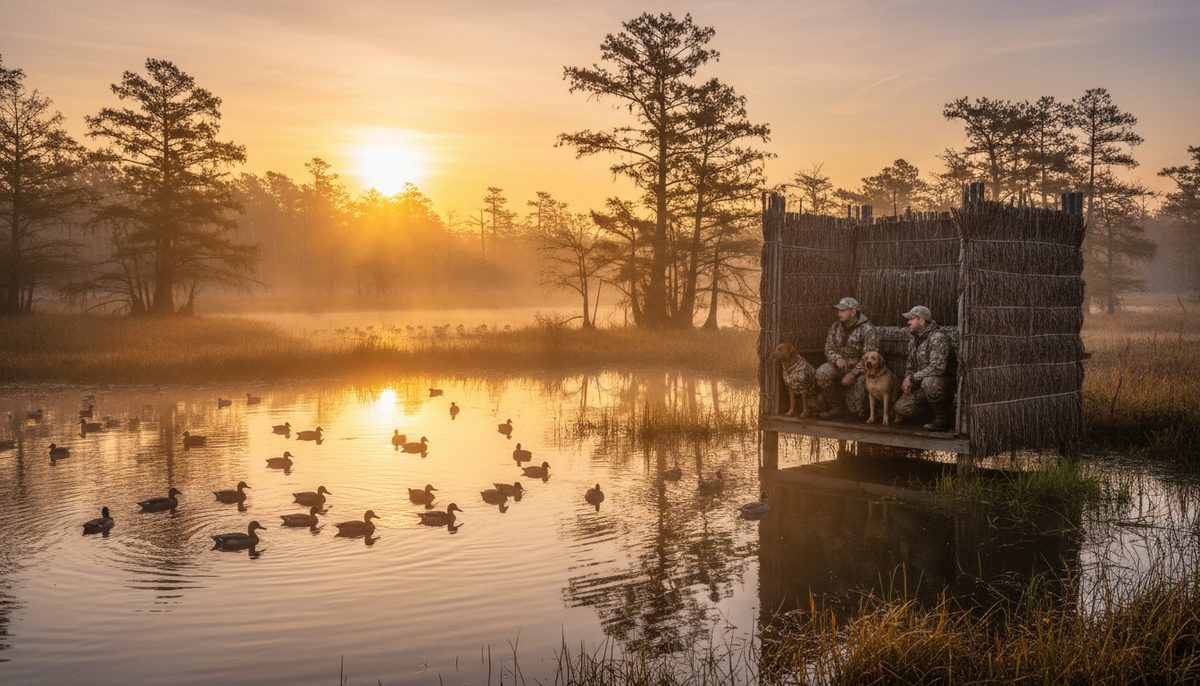
How to report poaching, baiting or trespass on NC waterfowl areas
Public waterfowl ground is a commons with very few wardens on it. The NCWRC Turn In Poachers line and the USFWS Raleigh baiting contact, and which one to use when.
Public hunting ground is a commons, and commons fail when the people using them assume somebody else is watching. There are very few officers covering a very large amount of coastal marsh, which means the practical enforcement mechanism on public waterfowl areas is a hunter with a phone. Two numbers cover almost everything you are likely to encounter out here, and they belong to two different agencies handling two different categories of problem.
The details
For anything happening now, use the state line. NCWRC Turn In Poachers 800-662-7137 — the Wildlife Resources Commission publishes a single statewide Report Wildlife Violations / Turn In Poachers line, and that is the number for illegal hunting, over-limits, shooting outside legal hours, trespass on posted ground, and hunting where hunting is not permitted. One number for the whole state, which is the design: you do not need to work out whose county you are standing in before you can report something.
For baiting, there is a second and more specialised route. USFWS Raleigh Resident in Charge 919-856-4786 for baiting questions — the commission's own waterfowl page directs hunters with baiting questions to the U.S. Fish and Wildlife Service Resident in Charge in Raleigh, and warns that substantial penalties apply for baiting violations and that the zone of influence around bait may extend a much greater distance than the baited patch itself. That second warning is the one to internalise, and it is why this number is as useful before a hunt as after one.
Use the baiting contact defensively, in other words, not only to report others. If you have any doubt about whether a field, an impoundment or a piece of flooded ground you have been invited to hunt is legal, the federal office is who resolves it — and resolving it beforehand is free, while getting it wrong is not. Zone of influence means that an entirely innocent-looking spot can be inside a baited area you cannot see from where you are standing.
What makes a report actually useful is detail, and detail means writing things down at the time rather than reconstructing them afterwards. Time, precise location, number of people, vehicle or boat description, what specifically you observed, and what you did not observe. An officer can do something with a timed, located, specific account. An indignant summary from three days later is very hard to act on, however genuine.
Do not confront people. The person shooting an hour after legal light in a marsh is not the person to have a conversation with about it, and a hunter who turns an enforcement matter into a personal dispute has made the situation worse and the evidence weaker. Note, leave, call. That is the whole protocol.
It is worth being clear-eyed about why this matters more here than it would on leased ground. Permit systems, closures and managed impoundments only survive politically while they are producing decent hunting and not producing incidents. Every unreported violation on public water makes the case for tighter restrictions on everybody, and the hunters who make the call are the ones keeping the access open for the rest.
Save both numbers in your phone before the season — the state line for what is happening in front of you, the federal Raleigh contact for anything involving bait, including your own doubts about a spot. Write down the details at the time, and never make it a conversation.
On the record: NCWRC Turn In Poachers 800-662-7137 (NC Wildlife Resources Commission — Where to Hunt & Shoot (ncwildlife.gov, retrieved 2026-09-17)) · USFWS Raleigh Resident in Charge 919-856-4786 for baiting questions (NC Wildlife Resources Commission — Waterfowl Hunting, Waterfowl Baiting Laws (ncwildlife.gov, retrieved 2026-09-17)) · G.S. 113-291.1 shooting hours, half hour before sunrise to half hour after sunset (N.C. General Statutes § 113-291.1 (ncleg.gov, retrieved 2026-09-17))
Hand-verified 2026-09-17 against the primary sources named above; where a fact could not be verified it was left out, never guessed.