Outer Banks septic guide
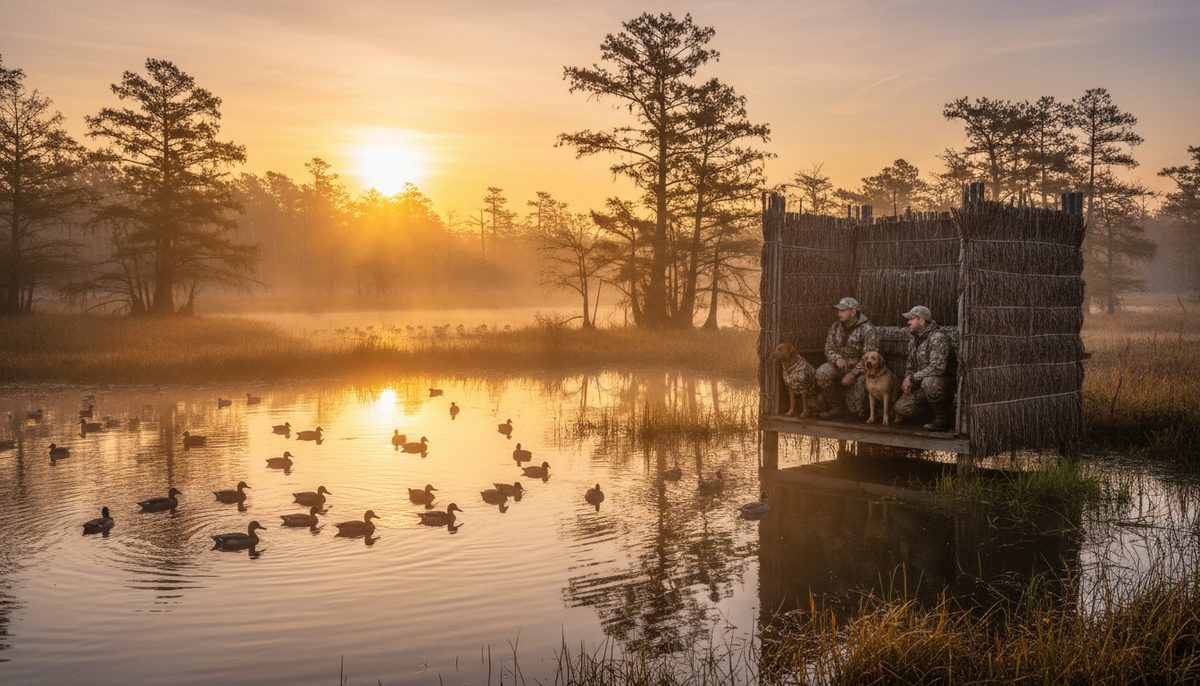
How NC game land waterfowl permit hunts work
Permit hunts on NC game lands ration crowding rather than raise money. What the Permit Hunting Opportunities system is for, and why you must check each specific game land.
The instinct is to read a permit requirement as a toll, and on game lands that reading is wrong in a way that matters. Some game lands require a permit to hunt, and the Wildlife Resources Commission is explicit about why it runs Permit Hunting Opportunities at all: to provide quality hunting experiences without overcrowding on those managed areas. The permit is a rationing device. Its job is to keep the number of guns on an impoundment low enough that the morning is worth having, which means every permit issued to somebody else is also protecting your hunt.
The details
That purpose is worth holding onto, because it predicts the system's behaviour. A revenue-driven scheme would sell as many permits as there were buyers. A crowding-driven one caps them at whatever the ground can carry and then turns people away, which is exactly what happens. It also explains why a permit cannot be lent, traded or used by a substitute on the morning: the number of permits is the number of hunters the impoundment was designed to hold.
The single most important operational instruction is a boring one. NCWRC Public Waterfowl Hunting Opportunities list lists the managed waterfowl impoundments and permit-only areas on Commission game lands, and the Commission warns in the same breath that permit requirements and available hunt days vary by location. Vary by location. Not a statewide rule with local footnotes — a genuinely different arrangement per site, which is why a hunter who has learned one game land's system knows nothing reliable about the next one.
The legal machinery underneath is not exotic but it does explain why the Commission can be this prescriptive. G.S. 113-264 WRC rule power over agency property gives it authority to regulate its game lands and other agency property, post restricted zones, manage public hunting and require written permission in some cases. Posting a zone and restricting it is a statutory power, not a policy preference, and a posted restriction on a game land carries the weight that implies.
Two consequences fall out of that for a hunter planning a season. First, read the current publication for the specific game land you intend to hunt, every year, rather than working from what a friend did two seasons ago — managed impoundments get re-managed. Second, note that the permit governs a hunt day, not a property: being drawn for one date on one impoundment does not put you on that game land at any other time, and it certainly does not put you on the next one over.
There is also a strong argument for applying to the unglamorous locations. The best-known impoundments attract the most applications, which is arithmetic rather than habitat quality. A managed impoundment on a game land nobody talks about is often being flooded, planted and rested on exactly the same schedule as the famous one. A hunter willing to drive an extra forty minutes routinely gets more days afield than one who applies only where everybody else applies.
Finally, scout the permitted hunt before you hunt it, within whatever access the area allows outside permit days. The permit gets you a morning; it does not get you knowledge of where the water is deep, where the birds pitch in, or how long the walk takes in the dark with decoys. A permit spent learning the ground is a permit half wasted, and on a system this tightly rationed you may not get a second one that year.
Treat the permit as a crowd cap rather than a ticket price, read the current listing for the exact game land you want rather than the general one, and apply where the applications are not. Those three habits get more OBX-area hunters onto managed water than any amount of gear.
On the record: Some game lands require a permit to hunt (NC Wildlife Resources Commission — Where to Hunt & Shoot (ncwildlife.gov, retrieved 2026-09-17)) · NCWRC Public Waterfowl Hunting Opportunities list (NC Wildlife Resources Commission — Public Waterfowl Hunting Opportunities PDF (ncwildlife.gov, retrieved 2026-09-17)) · G.S. 113-264 WRC rule power over agency property (N.C. General Statutes § 113-264 (ncleg.gov, retrieved 2026-09-17)) · G.S. 113-291.1 shooting hours, half hour before sunrise to half hour after sunset (N.C. General Statutes § 113-291.1 (ncleg.gov, retrieved 2026-09-17)) · NCWRC Turn In Poachers 800-662-7137 (NC Wildlife Resources Commission — Where to Hunt & Shoot (ncwildlife.gov, retrieved 2026-09-17))
Hand-verified 2026-09-17 against the primary sources named above; where a fact could not be verified it was left out, never guessed.